warning: There is no guarantee of future profits, platform success, or token value appreciation.
Variable Definitions
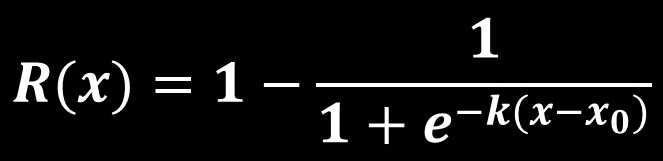
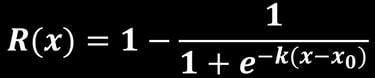
R(x): Normalized staking reward
x: Token value (market or index-based)
k: Sensitivity coefficient controlling reward adjustment speed
x₀: Inflection point where reward reduction is most significant
Reward Dynamics by Phase
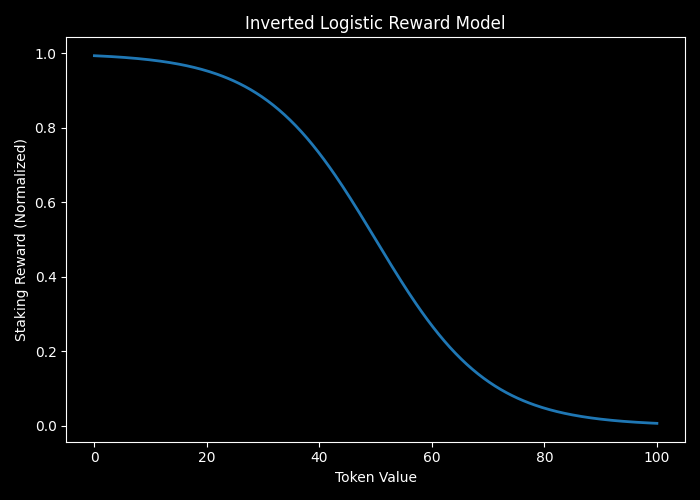
Early Phase (x < x₀)
Token value is relatively low
Rewards remain high and change slowly
Strong incentives for early adopters and validators
Growth Phase (x ≈ x₀)
Token value enters rapid growth
Rewards decrease at the fastest rate
Emission discipline is introduced gradually
Maturity Phase (x > x₀)
Token value stabilizes at higher levels
Rewards approach a lower bound asymptotically
Long-term inflation is effectively controlled
10.3 Economic Rationale
Predictable Emission Control
The inverted logistic function prevents abrupt reward reductions, replacing them with a smooth and continuous transition.
Value-Aligned Incentives
Rewards are tied to token value rather than time alone, aligning participant incentives with ecosystem growth.
Inflation Resistance
As the ecosystem matures, reward emissions naturally decline, reducing long-term dilution risk.
10.4 Utility & Governance
KRONA is used for:
Staking
Governance voting (with anti-whale limits)
Membership issuance
Platform service payments
10.5 Supply Control & Burn Policy
Dynamic token burn based on ecosystem activity
Inflation target: below 10% annually
Reserve-based liquidity stabilization
11. Risk Management
Technology Risks
Smart contract vulnerabilities
Mitigation: audits, formal verification, bug bounties
Market Risks
Regulatory changes
Mitigation: compliance-first design, jurisdictional adaptability
12. Legal Disclaimer
KRONA tokens are utility tokens. Participation involves market and technical risks. No guarantees of profit or value appreciation are provided.
KRONA Whitepaper
Version: 3.0 (Revised & Analyzed)
Last Updated: February 2026
KRONA Token–Based Escrow System for Physical Goods
Technical Whitepaper
1. Introduction
This document is a technical whitepaper describing a blockchain-based escrow system for physical goods powered by KRONA Token. The system is designed to address trust, settlement, and fraud risks inherent in online and offline goods transactions by replacing centralized intermediaries with smart contracts and protocol-level rules.
KRONA Token functions as a utility token for payment, escrow, staking, and risk control, enabling automated settlement, economic accountability, and global scalability for real-world commerce.
Rather than relying on institutional trust, the proposed system establishes trust through code, cryptography, and economic incentives, making it suitable for high-value goods, bulk transactions, and cross-border trade.
2. Problem Statement
2.1 Limitations of Traditional Escrow Systems
Dependence on centralized intermediaries
High fees and slow settlement cycles
Limited transparency of transaction states
Inefficient dispute resolution processes
Barriers to global and cross-border trade
2.2 Trust Issues in Physical Goods Transactions
Non-delivery or delayed delivery
Mismatch between advertised and delivered goods
Buyer payment default risks
Seller non-performance risks
3. System Overview
3.1 Core Components
KRONA Token: Primary payment, escrow, and staking asset
Blockchain Network: Immutable ledger and consensus layer
Smart Contracts: Automated escrow and settlement logic
Oracles: Secure connection between on-chain contracts and off-chain delivery data
Dispute Resolution Module (Optional): Multi-signature–based arbitration
3.2 System Objectives
Expand real-world utility of KRONA Token
Minimize trust requirements between counterparties
Bridge on-chain settlement with offline goods delivery
Support scalable, global commerce infrastructure
4. KRONA Token Escrow Smart Contract Architecture
4.1 Contract State Model
Each escrow contract operates using KRONA Token and transitions through the following states:
Initialized – Escrow contract created
Funded – Buyer deposits KRONA Token
Shipped – Seller submits delivery proof
Completed – Automatic settlement in KRONA Token
Refunded / Disputed – Refund or arbitration triggered
4.2 Core Functions
deposit() – Buyer deposits KRONA Token into escrow
setDeliveryPeriod() – Seller defines expected delivery period
confirmShipment() – Seller submits shipping confirmation
confirmReceipt() – Buyer confirms receipt
releaseFunds() – Automatic settlement to seller
refund() – Refund execution under predefined conditions
4.3 Expected Delivery Period Enforcement
At the time of listing creation, the seller must define an Expected Delivery Period, which becomes a binding condition of the smart contract.
Defined using blockchain timestamps or block intervals
Immutable once the escrow contract is activated
Fully visible to all participants prior to transaction execution
This mechanism ensures clarity of obligations and minimizes delivery-related disputes.
5. Offline Goods Verification and Oracle Design
Oracles serve as trusted data relays between physical-world events and on-chain logic.
5.1 Supported Verification Sources
Logistics provider delivery confirmations
QR / NFC scan events
Point-of-sale pickup authentication
Third-party verification services
5.2 Oracle Risk Mitigation
Multi-oracle consensus architecture
Cross-validation from independent data providers
Automatic dispute escalation upon data inconsistency
6. Security Architecture
6.1 Fund Security
KRONA Token locked within escrow smart contracts
Unauthorized withdrawals prevented at protocol level
Time-lock mechanisms to prevent premature fund release
6.2 Contract Integrity
Blockchain immutability guarantees
Mandatory pre-deployment code audits
Immutable core logic or proxy-based upgrade separation
6.3 Attack Surface Mitigation
Reentrancy protection patterns
Overflow and underflow prevention
Restricted external contract calls
7. Anti-Fraud Architecture
The system is designed to prevent fraud proactively, rather than relying on post-incident remediation.
7.1 Fraud Risk Scenarios
False shipment claims
Delivery delays or intentional non-delivery
Fraudulent dispute initiation
Oracle data manipulation
Duplicate asset or claim execution
7.2 Buyer-Side Fraud Prevention
Mandatory pre-funded escrow deposits
Time-bound receipt confirmation windows
Automatic settlement or escalation upon timeout
7.3 Seller-Side Fraud Prevention
No access to buyer funds prior to delivery verification
Mandatory shipment evidence submission
One-to-one binding between asset IDs and escrow contracts
7.4 Dispute Resolution Mechanism
Automatic dispute triggers upon predefined failure conditions
Multi-signature arbitration involving buyer, seller, and neutral arbitrator
All arbitration outcomes permanently recorded on-chain
8. Seller KRONA Token Holding and Staking Requirements
The KRONA Token escrow system enforces economic accountability for sellers by requiring minimum token holdings and, in high-risk scenarios, escrow staking.
8.1 Rationale for Seller Token Requirements
In traditional marketplaces, sellers can list goods without meaningful financial commitment, enabling delivery abuse and market manipulation. This system adopts the principle that selling authority must be backed by economic responsibility.
Sellers are therefore required to hold KRONA Token proportional to their listing value or transaction scale, establishing a baseline measure of credibility.
8.2 Minimum Holding Thresholds and Restrictions
If a seller’s KRONA Token balance falls below the required threshold:
High-value or bulk listings are restricted
Escrow contract creation above certain limits is blocked
Repeated violations increase seller risk classification
All restrictions are enforced automatically by smart contracts, without discretionary human intervention.
8.3 Seller Staking (Collateral) Mechanism
For high-value or bulk transactions, sellers must stake a defined amount of KRONA Token into the escrow contract.
Staked tokens remain locked during the transaction lifecycle
Full return upon successful and timely delivery
Partial or full slashing in cases of delay, misrepresentation, or contract breach
Slashed tokens may be used for buyer compensation, dispute costs, risk pools, or token burn mechanisms.
8.4 Dynamic Stake Calculation
Required stake amounts are dynamically calculated based on:
Transaction value and quantity
Asset category and risk profile
Seller transaction history and reliability metrics
This ensures higher accountability for higher-risk transactions while rewarding consistent, reliable sellers.
8.5 Expected Outcomes
Reduced incentives for seller misconduct
Formation of a reliability-driven seller ecosystem
Structural buyer protection
Enhanced utility, lock-up, and circulation of KRONA Token
Ultimately, the system enforces trust through economic design and immutable protocol rules, making it suitable for real-world goods commerce at scale.
9. Compliance and KYC Framework
While decentralized by design, the system incorporates risk-based compliance modules for high-value and bulk transactions.
9.1 Mandatory Seller KYC Conditions
Seller KYC verification is required when predefined thresholds are exceeded, such as:
Single transaction value above a set limit
Cumulative transaction volume within a given period
Repeated bulk transactions
High-risk asset categories (e.g., luxury goods, RWA, raw materials)
9.2 Tiered KYC Model
Tier 0: Low-value transactions – no KYC or minimal checks
Tier 1: Medium-risk transactions – basic identity verification
Tier 2: High-value or bulk transactions – enhanced KYC/AML
9.3 Privacy-Preserving Integration
KYC data is not stored on-chain. Only verification results (hashes or flags) are referenced by smart contracts to determine transaction eligibility.
10. Token Economics
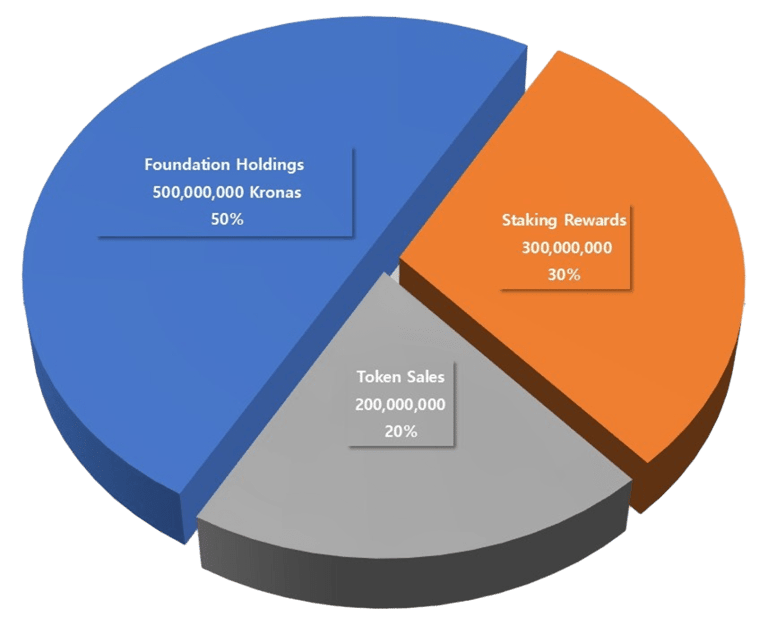
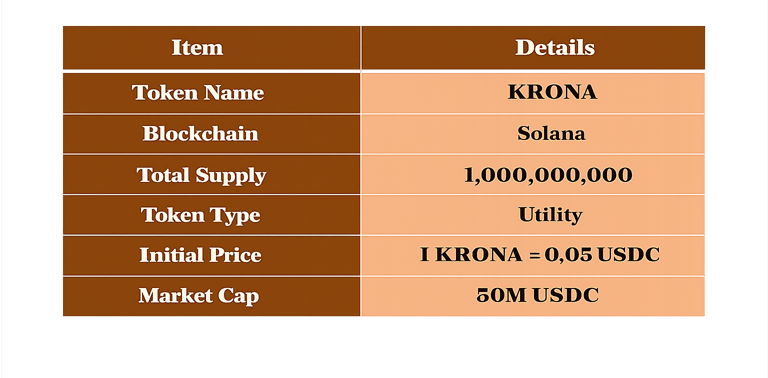
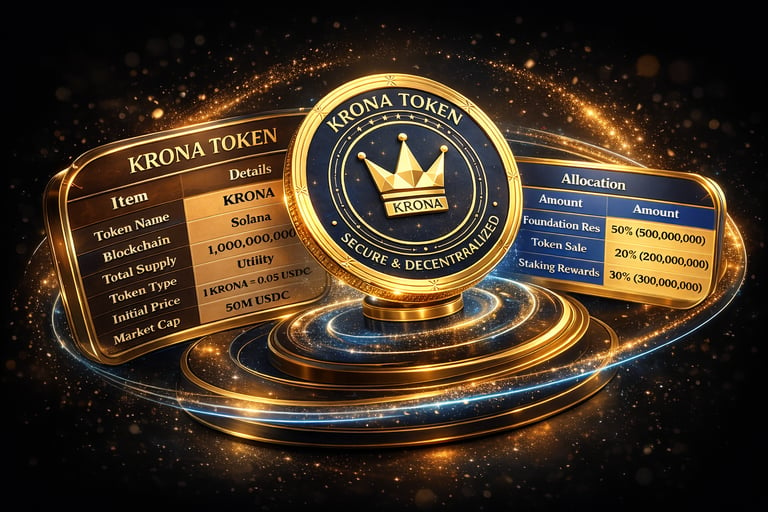
10.1 Token Overview
10.2 Token Distribution
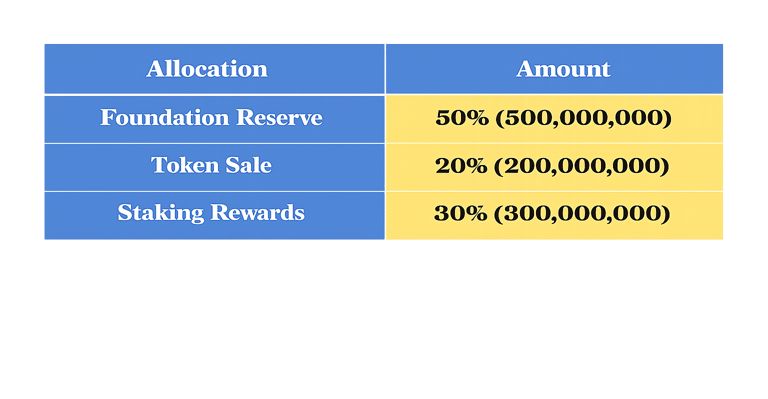
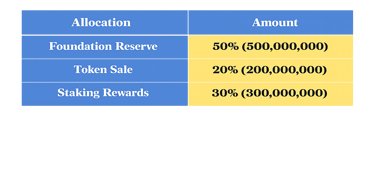
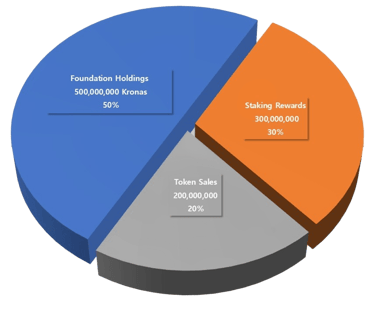
Monthly release: 2,000,000 tokens
Distribution period: 100 months
Staking rewards issued separately from token sale
10.3 Reward Models
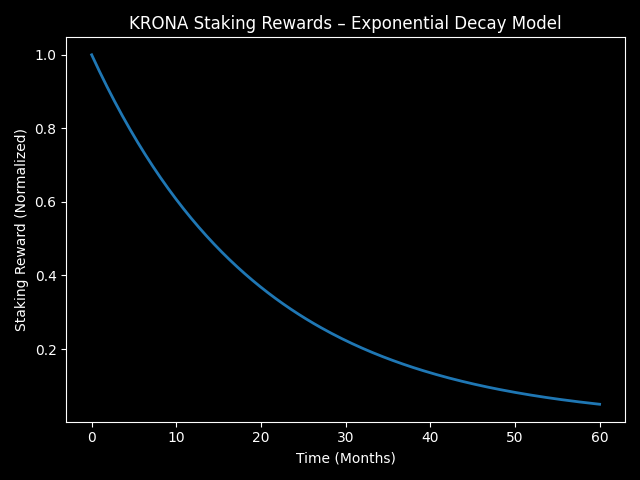
10.3.1 Exponential Decay Staking Reward Model
KRONA staking rewards follow an exponential decay model, designed to provide strong early participation incentives while ensuring long-term economic sustainability.
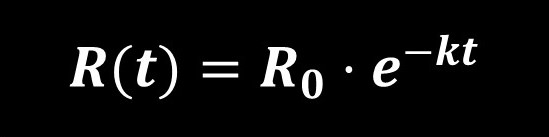
Reward Function

Variable Definitions
R(t): Staking reward at time t
R₀: Initial staking reward at t = 0
k: Decay rate (reward reduction coefficient)
t: Time elapsed (measured in months)
Model Rationale
Early Incentive Alignment
Higher initial rewards encourage early participation, helping bootstrap network security and liquidity.Controlled Token Emission
As time progresses, rewards decrease naturally, reducing inflationary pressure on the token supply.Long-Term Sustainability
The decay mechanism ensures that staking rewards remain economically viable without excessive dilution.Infrastructure-Oriented Design
This model aligns KRONA with infrastructure-backed blockchain economics rather than speculative emission models.
Investor Perspective
From an investor standpoint, the exponential decay model supports:
Predictable reward reduction
Supply discipline
Improved long-term token value stability
This structure positions KRONA as a cash-flow–oriented utility token with sustainable staking incentives.
10.3.2 Inverted Logistic Reward Model
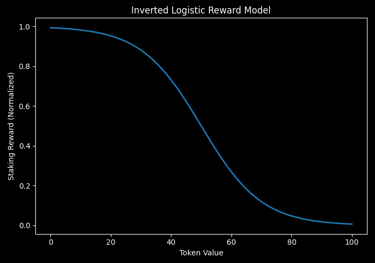
This reward model defines staking rewards as a decreasing function of token value, following an inverted logistic curve.
As the token value increases, staking rewards decrease smoothly and asymptotically, ensuring long-term economic stability.
The model is designed to:
Incentivize early participation
Prevent excessive reward inflation
Maintain predictable reward behavior at maturity
Reward Function
13. Conclusion
The KRONA Token–based escrow system replaces institutional trust with protocol-enforced guarantees, automated settlement, and economic accountability.
By combining smart contracts, seller staking, delivery-time enforcement, fraud prevention, and selective compliance, the system establishes a scalable foundation for secure, real-world commerce.
KRONA Token is not merely a payment instrument, but a core coordination asset that aligns incentives, enforces responsibility, and enables trustless trade.
KRONA
Harbourfront, 2/F, 22 Tak Fung Street, Hunghom, Kowloon, Hong Kong.
Email: info@krona.cloud
© 2025 Krona. All rights reserved.
Contact Us
We are a leading global provider of cloud services, dedicated to making cryptocurrency mining accessible to everyone.